flood
.webp)
.webp)
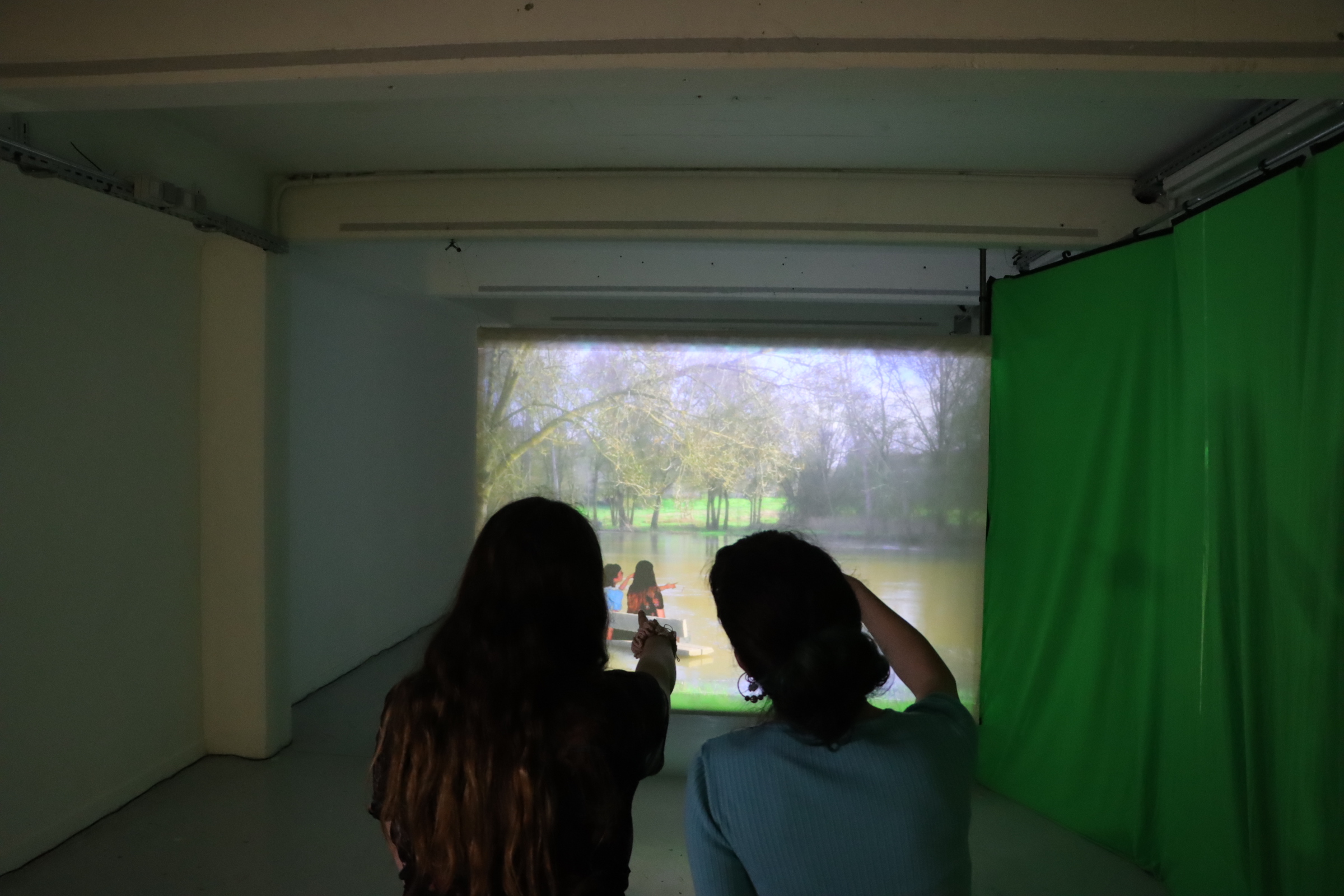
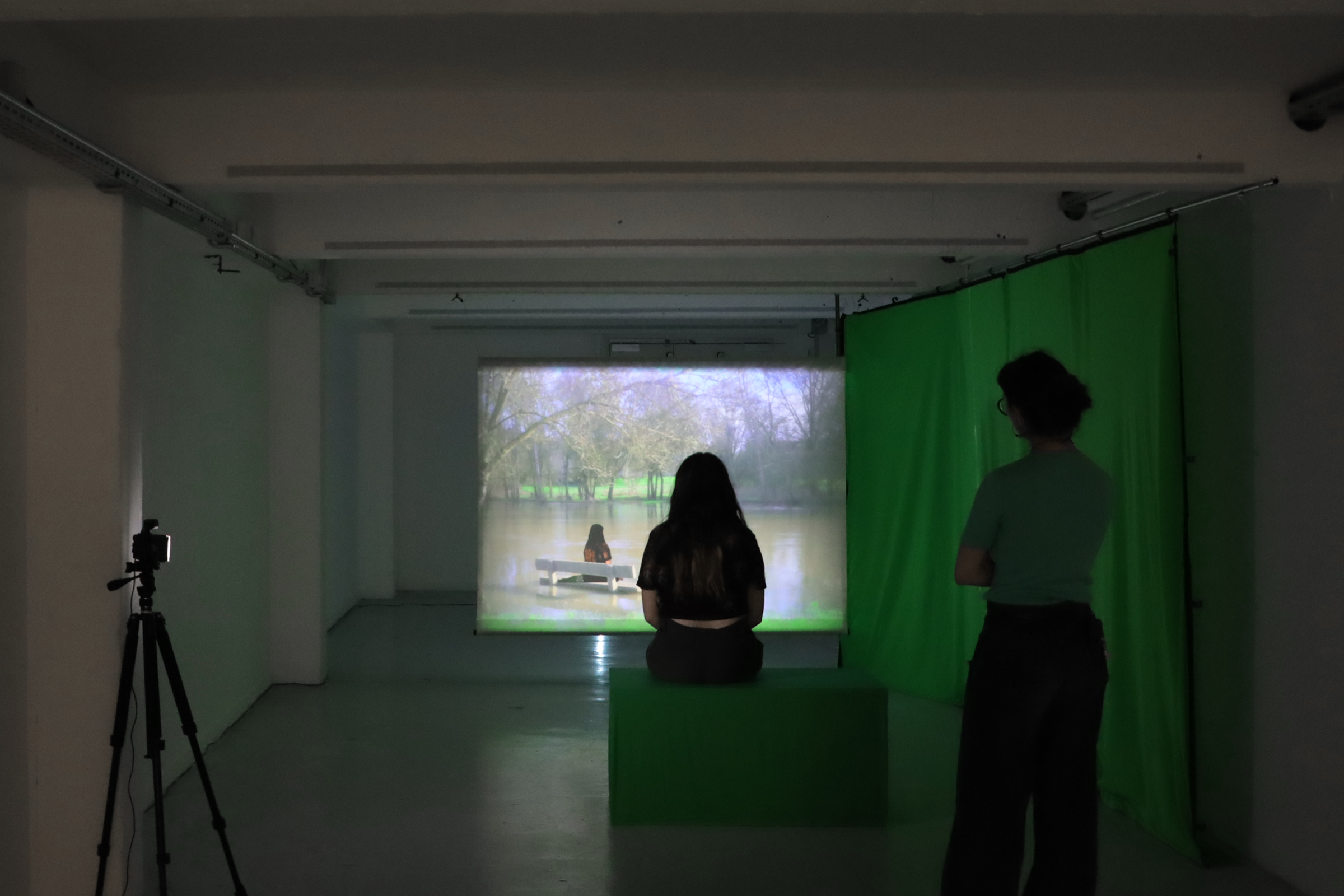
This installation places the viewer at the heart of an image, inviting them to merge with a world under submersion. Inspired by Itzhak Goldberg’s research on immersive installations, the piece stages the viewer as both observer and actor. The central image is a photograph of the flooding of the Thouet River, in which the spectator becomes immersed. The video overlay, supported by a green-screen set and a bench, creates a participatory experience where initial passivity transforms into engagement.
This process echoes Telematic Vision by Paul Sermon, where participants interact remotely through real-time transmission. Unlike the catastrophic representations of Maarten Demmink , who sculpts architecture through the ravages of nature, this work seeks neither an aestheticization of disaster nor a dystopian vision.
Far from a distant future, today’s landscapes already bear the marks of climate upheaval. Inspired by Patrick Boucheron’s "Le temps qui reste" (Seuil, 2023), this project questions how ecological crises are perceived and represented. Floods whose intensity has increased by 20% over the past sixty years according to climatologist Robert Vautard are no longer projections but visible and tangible realities.
This installation therefore proposes a measured form of immersion, far from the apathy provoked by the accumulation of catastrophic images denounced by Dork Zabunyan. By physically immersing the viewer, it invites reflection on human impact and the gradual transformation of our landscapes. The piece confronts the duality between stability and disappearance, between what remains and what fades away.

.webp)
